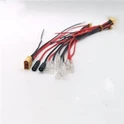
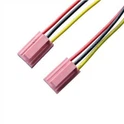
Overview:
Before the 1950s, the structure of automobiles was mainly mechanical, and electrical equipment was used sparingly. However, with the advancement of electronic technology in the 1960s, electronic devices began to be used in automobiles. With the development of intelligent and electrified vehicles, the number of vehicle electrical components has increased significantly. As a result, the weight ratio of wiring harnesses, which serve as the connecting carrier for all vehicle electrical components, has also increased. In response to the demand for weight reduction in new energy vehicles due to battery capacity restrictions, the use of aluminum wire instead of traditional copper wire for wiring harness lightweighting has become increasingly popular in the industry. Aluminum wire can achieve a weight reduction of 40% compared to copper wire and a cost reduction of around 30%. However, replacing traditional coaxial circular wires with aluminum wires results in an increase in diameter, making it difficult to use aluminum wires due to space limitations in vehicle wiring harness design. To solve this problem, an application solution using aluminum busbars is proposed.
Solution:
The application of aluminum busbars in wiring harnesses also involves some key points, and their corresponding solutions are as follows:
1.Connection between aluminum busbars and copper terminals or wires: In automotive wiring harness applications, terminals and wires are made of copper and connected by crimping. However, since aluminum busbars use aluminum as the conductor material, and terminals can only use copper due to electrical constraints, direct crimping will cause electrochemical corrosion due to different metal reactivities. Currently, the industry uses friction welding and ultrasonic welding to solve the problem of copper-aluminum electrochemical corrosion. With the development of ultrasonic welding technology, high-power ultrasonic welding equipment has been developed and maturely applied in the wiring harness industry, enabling the connection between aluminum busbars and copper wires, aluminum wires, and copper terminals.
2.Aluminum busbar forming technology: Aluminum busbar wiring harnesses are generally used inside the vehicle cabin or chassis and are designed to be flat and attached to the vehicle body to save space and enable automated assembly. Therefore, the design of aluminum busbars needs to closely match the vehicle body design. The gap between parts in the wiring harness factory has been reduced from the initial 59mm to 26mm.
In addition to these solutions for aluminum busbar applications in wiring harnesses, there are also methods for improving upper neck loads and reducing head/neck injury criteria (NIC) values, such as increasing friction between the dummy and seat backrest, reducing headrest gap, increasing headrest height and stiffness, and improving frame strength.